~5 min read
Fixing the Crocker Park dock
A July rainstorm broke a flotation log free beneath the Crocker Park dock, and the town closed one of its most popular swimming spots. The obvious next step is to call the contractor who has always fixed the town's docks and have him fix it. The town cannot just do that anymore. Behind that small fact is a much larger shift – the handshake giving way to the process – that is better and worse at the same time.
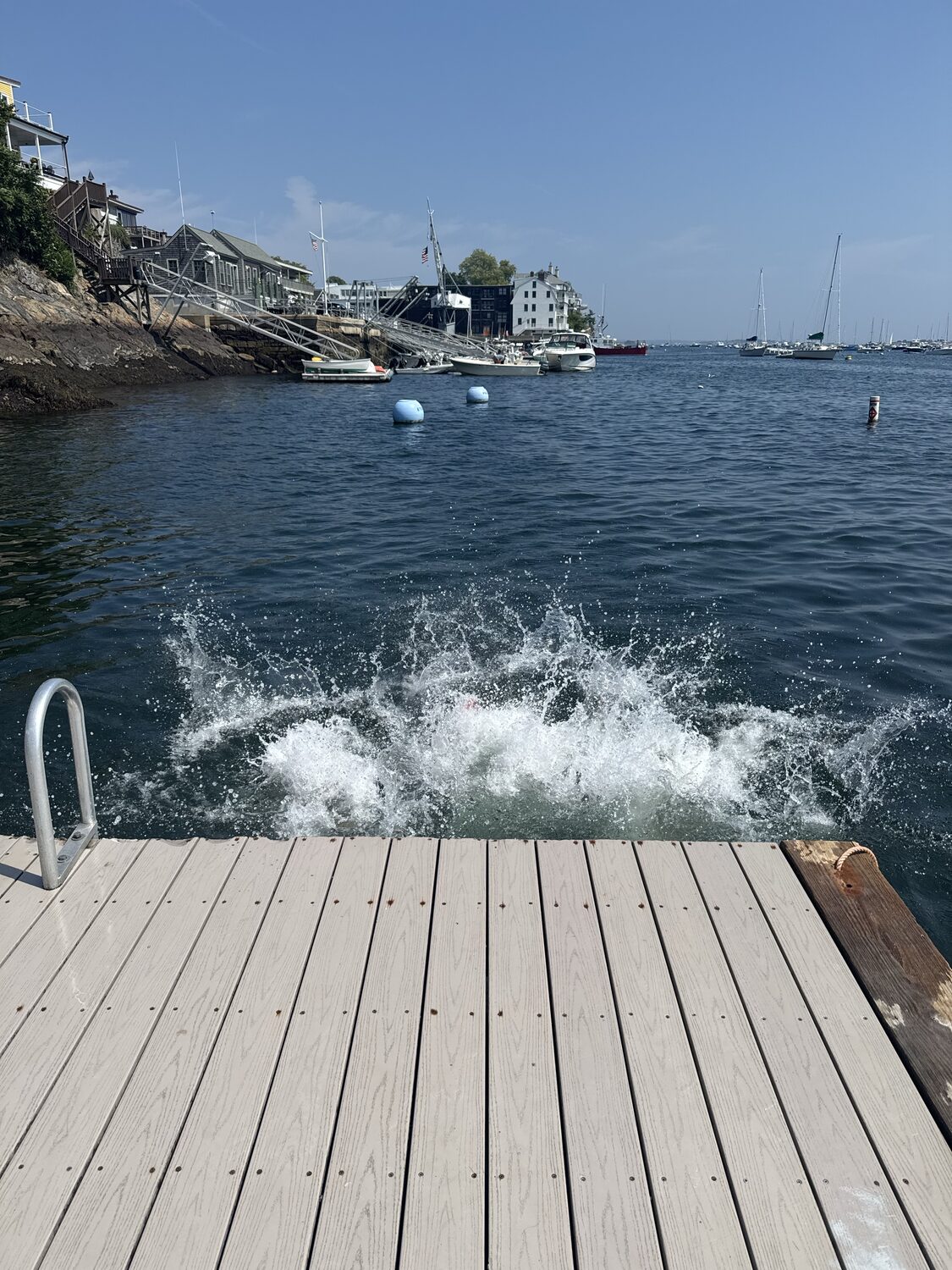
The situation
The town's docks and floats are put in, pulled out, and repaired by one contractor: Marblehead Marine Construction, the trade name of David Haley Inc.
"Dave Haley moves all our docks."Harbors and Waters Board meeting record, February 2023
He is also the one who chases down docks that break loose – when the Village Street dock washed to Kettle Cove in Magnolia in 2023, he brought it back – and he has donated a float to the town. In fiscal year 2026 the town paid his business $47,846.75 across 13 payments, all coded "Float work Blanket PO" – a standing account it draws on as needed. No competitive bid stands behind it in any record we found; the payments are in the FY26 checkbook. So when the dock breaks, the obvious move is to call him. Whether the town is allowed to is the catch.
Why it is not that simple
Paying a contractor for a service is procurement, and state law – Chapter 30B, the Uniform Procurement Act – sets the process by the price:
| Value of the work | What the law requires |
|---|---|
| Under $10,000 | Informal, no set process. |
| $10,000–$50,000 | Written quotes from at least three vendors. |
| Over $50,000 | A formal, advertised bid. |
The price that counts is the size of the procurement, not a single payment. For work a town buys year after year, that means estimating the yearly total and procuring accordingly. If the float work is one recurring service – installing, pulling, and maintaining the same docks each season – then roughly $48,000 a year puts it in the three-quotes range, near the line where a full bid is required, and there is no exemption for simply trusting the contractor who has always done it.
That is not the same as calling the past work improper. The law bars deliberately splitting one job into smaller payments to duck a threshold, but genuinely separate jobs – a storm repair here, a broken float there – can each stand on their own, and small, frequent purchases for unpredictable work can be perfectly legitimate. Whether Haley's float work is one recurring service that should be bid as a whole, or a run of separate jobs, is the judgment the town's first full-time procurement officer, hired in 2025, now has to make. It is why the town cannot just cut a check for the repair without asking the question first.
What the town did
The town's Chief Procurement Officer, Allison Jenkins, laid it out in a July 2026 email: the urgent safety work and the permanent repair were handled as two separate jobs.
Right away, the town secured the site, removing the gangway and making the dock inaccessible. That cost under $10,000, so it needed no bidding.
The permanent repair will cost more, so it has to be competitively bid – write a scope, post it, take quotes, award the work. Jenkins said the delay was never about whether the dock would be fixed, only about following the rules for the permanent job. By late July the dock had been pulled from the water and the town had posted the job, with bids due August 13, 2026; the harbormaster said repairs were still weeks away.
One change would stop the next storm from restarting the clock: bid a multi-year dock-maintenance contract once, so future repairs draw on an agreement already in place.
What is still unknown
- Whether the float work should be bid as one service. The current repair is being quoted competitively. The ~$48,000-a-year blanket order is a separate question: whether it is one recurring service the town should procure as a whole, or a run of genuinely separate jobs, and whether it has ever been bid, is not established in the record we reviewed.
- How much the town has paid over time. FY2026 was $47,846.75; the town's open-finance portal did not return earlier years.
- Who gets the job. Bids are due August 13, and the town has not chosen a contractor. The one who has long handled the town's floats could win the competitive process.
The end of the handshake
The dock is one small sign of a change running through the whole town: the handshake giving way to the process. Much of Marblehead's public waterfront was built by private hands – Crocker Park itself was donated to the town in 1885 – and for generations its upkeep ran on informal arrangements: volunteers, donations, and a trusted contractor on a handshake. That is being replaced, on purpose, by formal bidding and managed liability.
Residents still pitch in, but the offers now run through paperwork. A resident privately repaired the failing Fort Beach steps in 2022, routed through a permit and a donation account. When both waterfront boards said they no longer wanted to maintain the State Street Landing restrooms – shut in winter for over twenty years – a residents' group offered to run them with volunteers. The board said yes, but only "providing there is no expense to the enterprise fund," and the lasting fix turned out to be a bid-out heating contract, not the volunteers.
The reason is increasingly said out loud: volunteers "cannot be used to staff the [Devereux Beach] lot because of labor requirements," and under the state's Tort Claims Act even unpaid help can expose the town, so it now arrives wrapped in permits and insurance forms. The town built the machinery on purpose, too, hiring its first full-time procurement officer in 2025 after the old patch-it-together model proved "not sustainable" and drew an audit finding. Now even a set of park stairs draws seven or eight bids.
"I work on handshakes and stuff like that, so this is difficult, but it's in the best interest of the town, and so I have to work forward on this."A department head, on putting a long-standing trash contract out to bid, April 2026
Is that better or worse for the town? Both.
Better
The same rules apply to everyone, the price is competitive and documented, and the town – not a volunteer or a handshake vendor – carries the risk when something goes wrong.
Worse
It is slower and often costlier, it sheds local knowledge and goodwill, it turns away people who just want to help – and this summer it means empty water where the dock used to be, over a repair the old way might have done in two weeks.
None of this is an accident, and little of it is likely to reverse. The town is trading the handshake for the process, one arrangement at a time, and the trade runs both ways at once: more fairness, less improvisation; more protection, less speed. The Crocker Park dock will come back, competitively bid and properly insured. It just will not come back this summer – and a summer is not a thing a town gets back.
Sources and methodology
The dock closure and status. Marblehead Current: "Damage forces closure of popular Crocker Park dock," July 8, 2026, and "Crocker Park dock repairs still weeks away," July 17, 2026 (the RFP and Aug. 13 bid deadline).
The Haley / Marblehead Marine quotes. From the League of Women Voters of Marblehead Observer Corps, volunteers who summarize public meetings the town does not record on video. These are the observers' summaries, not verbatim minutes. Reports cited: Harbors and Waters Board, January 9 and February 6, 2023; Recreation and Parks Commission, August 1, 2023.
The town's account. How the closure was handled – the under-$10,000 work to secure the site and the competitive process for the permanent repair – comes from an emailed explanation by Allison Jenkins, the town's Chief Procurement Officer, in July 2026.
The payment figure. Town of Marblehead open-finance checkbook
(Socrata portal), FY2026. Vendor "MARBLEHEAD MARINE CONS INC": 13 payments totaling
$47,846.75, Harbor Enterprise fund, purpose "Float work Blanket PO," captured in
data/checkbook_FY26_2026-06-30.csv; the same total appears in an independent
April 2026 snapshot of the portal. The payee name is the town's own; the tie to David
Haley's marine business is corroborated by the Harbors and Waters Board record. FY2026
only; the portal did not return prior years.
Chapter 30B. That the procedure is set by the estimated dollar value, and that bid-splitting is "illegal under Chapter 30B" while small frequent purchases can be legitimate with a "good business reason," are from The Chapter 30B Manual, Office of the Inspector General; thresholds also from the Inspector General's July 2025 charts and MGL c.30B sections 4–6.
The broader shift. The examples in "The end of the handshake" come from the town's own public record: Select Board and Board of Health meeting transcripts (linked in the footnotes) and League of Women Voters observer reports. The park-donation history (Crocker, 1885) is from the Essex Coastal Scenic Byway. Casting the Massachusetts Tort Claims Act and Chapter 30B as the drivers of the shift is this project's synthesis, not a claim made by any single cited source.